Introduction
Imagine attending a business meeting in Tokyo, learning from a Harvard professor, shopping in New York, and exploring the surface of Mars without leaving your home. It may sound like science fiction, but this is the vision behind the Metaverse.
The Metaverse is one of the most exciting technological concepts of the modern era. It promises to transform the way people work, learn, socialize, shop, and experience entertainment.
Many experts believe it could become the next evolution of the internet, creating immersive digital environments where physical and virtual worlds blend together.
What is the Metaverse?
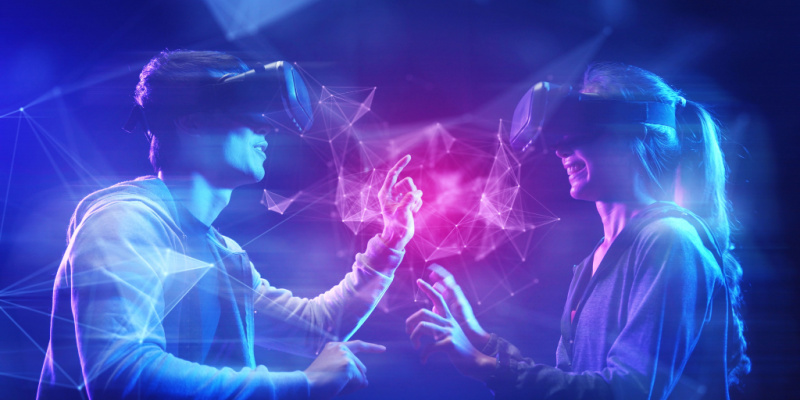
The Metaverse is a shared digital universe where people can interact with virtual environments and one another in real time.
Unlike today’s internet, where users mainly view content through websites and applications, the Metaverse allows people to become part of the experience itself.
The Metaverse combines:
Virtual Reality (VR)
Augmented Reality (AR)
Artificial Intelligence (AI)
Blockchain
Cloud Computing
High-Speed Networks
In simple words, it is like the internet, social media, online gaming, digital commerce, and virtual reality coming together into one connected digital world.
A Brief History of the Metaverse
The term Metaverse was first introduced in 1992 by science-fiction author Neal Stephenson in his novel Snow Crash. In the book, people interacted inside a virtual world using digital avatars.
Over the years, several platforms helped bring this concept closer to reality:
The Palace (1995)
Active Worlds (1995)
Second Life (2003)
A major turning point came in 2021 when Facebook rebranded itself as Meta, signaling its commitment to building the Metaverse.
Technologies Behind the Metaverse
Virtual Reality (VR)
Virtual Reality creates immersive digital environments through specialized headsets. Users can explore virtual spaces, interact with digital objects, and experience realistic simulations.
Augmented Reality (AR)
Augmented Reality overlays digital information onto the physical world. It is used in virtual product previews, education, navigation, and interactive experiences.
Artificial Intelligence (AI)
AI powers smart virtual assistants, realistic digital avatars, personalized experiences, and intelligent virtual environments.
Blockchain Technology
Blockchain supports digital ownership, secure transactions, virtual assets, and decentralized economies.
Cloud Computing
Cloud platforms provide the infrastructure needed to support large-scale virtual worlds and millions of users.
5G and Future Networks
Fast and reliable networks reduce delays and improve the quality of immersive experiences.
Why is the Metaverse Important?
The Metaverse has the potential to transform how people learn, work, shop, travel, socialize, and conduct business.
Just as the internet changed communication and commerce, the Metaverse could redefine digital interaction by making users active participants instead of passive viewers.
Real-World Applications of the Metaverse
Education
Students can attend virtual classrooms, explore historical events, conduct science experiments, and learn from experts worldwide.
Healthcare
Healthcare professionals can use the Metaverse for medical training, surgical simulations, virtual consultations, and mental health therapy.
Business and Remote Work
Virtual offices can help teams collaborate from different locations through immersive meetings and shared digital workspaces.
Retail and Shopping
Customers can visit virtual stores, try products digitally, and experience immersive shopping before making a purchase.
Real Estate
Buyers can take virtual tours of homes and commercial properties without physically visiting them.
Gaming and Entertainment
Gaming remains one of the most advanced Metaverse applications, offering virtual concerts, live events, and immersive digital worlds.
Benefits of the Metaverse
Enhanced Learning: Interactive experiences make education more engaging.
Global Accessibility: People can access opportunities regardless of location.
New Business Opportunities: The Metaverse may create new industries and careers.
Better Collaboration: Virtual workspaces can improve remote teamwork.
Personalized Experiences: AI can tailor digital environments to user preferences.
Greater Creativity: Users can build, design, and monetize virtual experiences.
Challenges and Risks of the Metaverse
Privacy and Security Concerns
The Metaverse may collect personal information, behavioral patterns, and biometric data. Protecting user privacy will be critical.
Addiction and Mental Health Issues
Highly immersive environments may encourage excessive usage, which can lead to anxiety, isolation, and reduced productivity.
Economic Inequality
Not everyone can afford advanced hardware and high-speed internet. This could widen the digital divide.
Loss of Physical Interaction
Virtual interactions should support human relationships, not replace genuine face-to-face communication.
Legal and Ethical Challenges
Important questions remain about digital ownership, virtual identity, governance, and intellectual property rights.
Environmental Impact
Large virtual worlds require powerful data centers that consume significant energy.
Physical Health Concerns
Extended VR usage may lead to eye strain, headaches, motion sickness, and posture-related issues.
The Future of the Metaverse
The Metaverse is still in its early stages, but its future looks promising. In the coming years, we may see virtual universities, digital hospitals, immersive workplaces, smart cities powered by digital twins, AI-powered avatars, and advanced virtual commerce systems.
As technology continues to evolve, the Metaverse could become as common and important as the internet is today.
Key Takeaways
The Metaverse is a shared digital universe where users interact through immersive experiences.
It combines VR, AR, AI, Blockchain, Cloud Computing, and Web3 technologies.
Applications extend far beyond gaming.
Education, healthcare, retail, business, and entertainment may benefit significantly.
Privacy, security, accessibility, and ethical concerns remain major challenges.
Let's Break It Down with a Story
It was a Sunday morning, and Daksh had just finished breakfast when he noticed his sister Shivi wearing a strange-looking headset.
Daksh: "What's that?"
Shivi smiled.
Shivi: "Want to see the future?"
Before Daksh could answer, Shivi handed him the headset.
The moment he put it on, his living room disappeared.
Suddenly, he found himself standing in a futuristic city filled with towering digital skyscrapers, flying vehicles, and people from different countries walking around as avatars.
Shivi: "Welcome to the Metaverse."
Daksh turned and saw Shivi standing beside him, not physically, but as a digital avatar.
Daksh: "Wow! This feels so real. It's like I'm actually here."
Shivi: "That's exactly the idea. The Metaverse is designed to make digital experiences feel as natural and immersive as real life."
As they walked through the virtual city, Daksh noticed a massive building labeled Global University.
Daksh: "What's that place?"
Shivi: "Let's go inside and find out."
Within seconds, they entered a virtual classroom where hundreds of students from different countries were attending a live lecture about space exploration.
Daksh: "This is incredible! People can attend classes from anywhere in the world."
Shivi: "Exactly. Education is one of the areas where the Metaverse could create a huge impact."
After leaving the classroom, they walked into a giant virtual shopping mall.
Instead of scrolling through products on a website, Daksh could pick up items, inspect them from every angle, and even try on clothes using his avatar.
Daksh: "This feels much better than online shopping."
Shivi: "And we're just getting started."
Moments later, they found themselves standing on the surface of Mars.
Daksh: "Wait... we're on Mars?"
Shivi: "Not physically. But scientists and educators can create experiences like this to help people learn and explore places that would otherwise be impossible to visit."
Daksh stood quietly, amazed by what he was seeing.
Daksh: "The possibilities seem endless. People could learn, work, travel, shop, and socialize without leaving their homes."
Shivi: "That's why so many companies are investing billions into building the Metaverse."
Suddenly, the virtual world faded away as Daksh removed the headset.
He was back in his living room.
Daksh: "That was amazing. But I guess there must be some challenges too."
Shivi: "Absolutely. Like any powerful technology, the Metaverse has risks. Privacy concerns, cybersecurity threats, digital addiction, accessibility issues, and even legal questions about ownership and identity."
Daksh: "So it's not just about building cool technology."
Shivi: "Exactly. The real challenge is making sure the technology is secure, ethical, and beneficial for everyone."
Daksh looked at the headset resting on the table.
Daksh: "It feels like we're standing at the beginning of something huge."
Shivi: "We are. The Metaverse might become the next major evolution of the internet. The question is not whether it's coming. The question is how we choose to build and use it."
As Daksh reflected on everything he had experienced, he realized that the Metaverse was far more than a technological trend.
It was a glimpse into a future where the boundaries between the physical and digital worlds become increasingly connected.
Frequently Asked Questions
What is the Metaverse?
The Metaverse is a shared digital environment where users interact with virtual worlds and each other using technologies like VR, AR, and AI.
Is the Metaverse the future of the internet?
Many experts believe the Metaverse could become the next evolution of the internet by creating immersive digital experiences.
What technologies power the Metaverse?
The Metaverse relies on Virtual Reality, Augmented Reality, Artificial Intelligence, Blockchain, Cloud Computing, and high-speed networks.
What are the risks of the Metaverse?
Privacy concerns, cybersecurity threats, digital addiction, economic inequality, and legal challenges are some of the major risks.
How can businesses benefit from the Metaverse?
Businesses can use the Metaverse for virtual meetings, employee training, digital commerce, customer engagement, and immersive marketing experiences.
Conclusion
The Metaverse represents one of the most ambitious technological developments of the 21st century. By combining Virtual Reality, Augmented Reality, Artificial Intelligence, Blockchain, and Cloud Computing, it aims to create immersive experiences that transform how people learn, work, socialize, and conduct business.
While challenges related to privacy, security, accessibility, and regulation remain significant, the opportunities are equally remarkable. From education and healthcare to business and entertainment, the Metaverse has the potential to reshape entire industries and redefine human interaction.
The Metaverse is no longer just a futuristic dream. It is an emerging reality that may become the next major evolution of the internet. The question is not whether it will impact our lives, but how prepared we are to embrace it responsibly.